
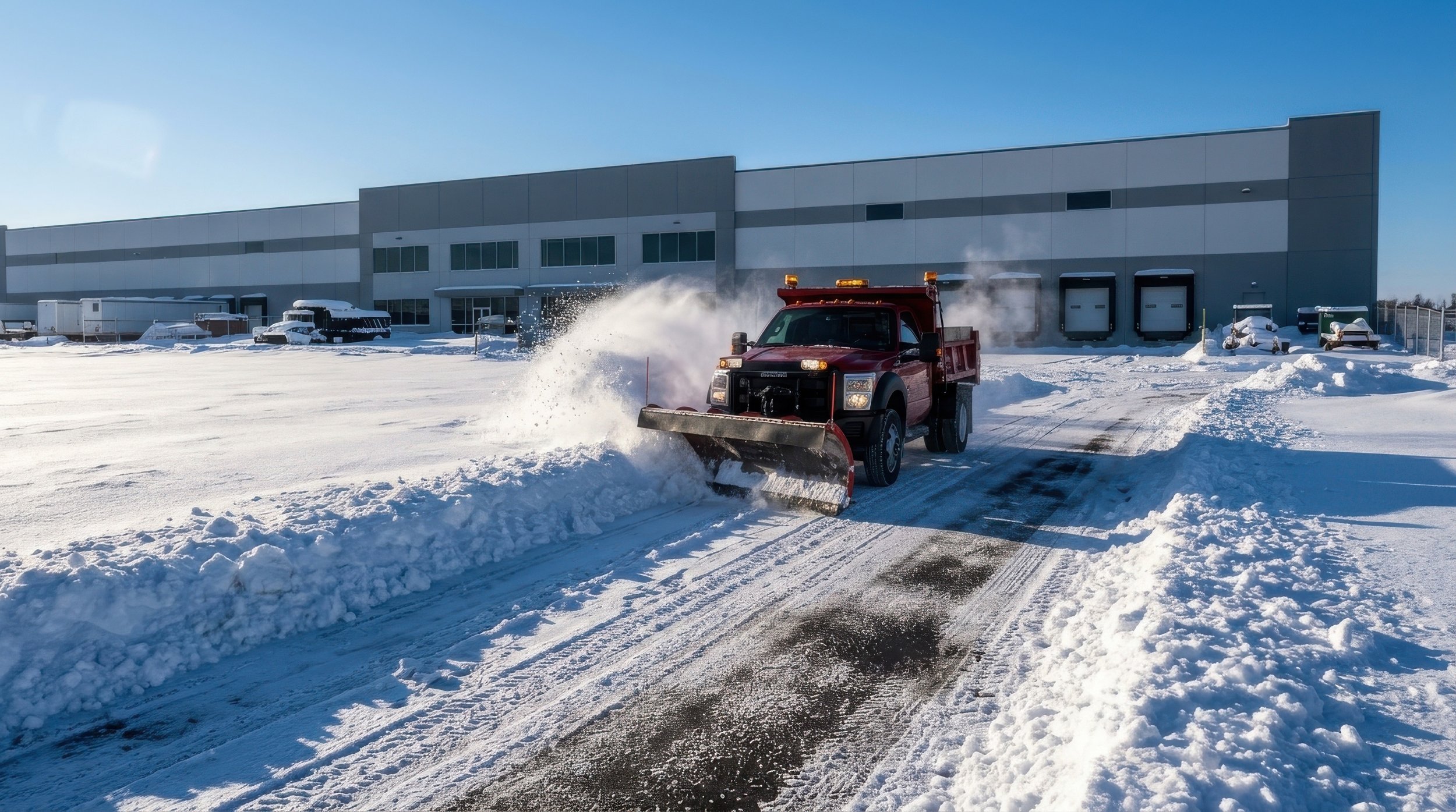
The work that decides how a property comes through a storm starts hours before the first flake and continues long after the plow trucks leave. Commercial snow plowing in Lanham, MD is routing, pre-treatment and equipment selection far more than it is pushing snow across asphalt.
Two sites of the same size, on the same night, with the same forecast, can open at very different times depending on how all three were planned.
Artistic Landscaping has served HOAs and commercial properties across Maryland and Northern Virginia for over two decades, and snow work here is operated entirely by Artistic’s own uniformed crews rather than subcontractors.
That matters most during the hours nobody sees, because the crew pre treating a loading dock at two in the morning is the same crew that mowed the island beside it in July and knows exactly where the curb line sits under the snow.
Related: Commercial Snow Removal Services in Lanham, MD: What the Contract Has to Say Before the First Flake
What Happens on a Commercial Property Before Snow Starts Falling?
Pre-treatment goes down ahead of the forecast, so precipitation lands on a treated surface instead of bonding to cold concrete.
A bonded layer takes several times the material and several times the labor to break later, which is why proactive pre-treatment ahead of forecast storms is the first step on every contracted property.
Staging matters too. Equipment and material move to the site or close to it before roads deteriorate, because a truck stuck across the county is of no use to a property manager at four in the morning.
Crews and routes are confirmed while the forecast is still firming up, so the first pass starts when the snow does.
How Does a Snow Plowing Route Get Ordered Across Several Properties?
A route gets ordered by what each site has to be ready for, not by distance.
A medical office with a seven o’clock opening sits ahead of a retail center opening at ten, and a property with a single narrow entrance is cleared before the snow banks in and takes the approach with it.
Contracted properties receive priority routing, which means they are serviced in a defined order instead of competing for first call availability. Our teams build that order before winter, not during a storm, and every manager on the route knows where they sit in it.
Which Snow Plowing Equipment Matches Which Part of a Lot?
Each part of a lot gets matched to the machine that can clear it cleanly. Open parking fields take stake body plow trucks and heavy duty skid steer plows, while tight islands, drive through lanes and parking structures need pickup plow trucks that can turn inside them.
Stake body and pickup inlay salters handle treatment behind the plow, and walks, entrances and accessible routes are cleared on foot and then de iced and salted.
A contractor running one machine across all of that leaves the awkward ground for last, and the awkward ground is where people walk.
Related: How to Prepare Your Commercial Property for Winter: Snow Removal and Landscape Prep
Why Does a Year Round Grounds Vendor Clear Snow Faster?
Site knowledge is what lets a year round vendor clear faster. A crew that has handled the property’s commercial landscape maintenance since spring knows where the drains sit, which curbs sit proud, where the irrigation heads run and which beds take damage from piled snow. A seasonal plow contractor learns those by hitting them.
Pile placement is the clearest example. Stacked in the wrong corner, meltwater crosses a walkway and refreezes every night for two weeks.
Stacked where the crew knows the grade falls toward a drain, the same pile melts off without creating a second problem.
What Does Ice Management Cover After the Plowing Stops?
Ice management covers the thin compacted film plowing leaves behind, which is the layer people slip on.
Plowing clears the bulk, and treatment after the pass addresses what remains, with the rate set by pavement temperature rather than air temperature.
Refreeze through the following nights usually needs further passes, particularly on north facing approaches and shaded loading areas that get no sun through a short winter day.
Walkways, entrances and high traffic zones get de icing and salting on those return visits, which reduces slips, falls and liability for the property.
Line Up Snow Plowing Coverage With Your Grounds Contract
Properties that come through February well are generally the ones where snow was planned in September alongside everything else on the site. Under a bundled winter service plan, the routes, the pile locations and the pre treatment schedule are set with the same crew that maintains the property the rest of the year.
Artistic Landscaping delivers commercial snow plowing and ice management for contracted grounds clients across Prince George’s County and the wider Maryland and Northern Virginia area.
Get in touch and we will walk the property, map the routes and piles, and set out what winter coverage will look like. Schedule your winter coverage walkthrough with Artistic Landscaping.
In Summary
Is snow work available without a grounds maintenance contract?
Snow work is reserved for contracted maintenance clients and is not sold as a standalone service. Artistic Landscaping builds snow removal into a bundled winter service plan, which keeps the same crews, the same site knowledge and the same accountability on the property all twelve months.
How are sidewalks and entrances handled on a managed property?
Sidewalks and entrances get their own pass instead of being an afterthought behind the plow. Walks, entrance aprons and accessible routes are cleared by crews working on foot and then de iced and salted, because a plow truck cannot reach them safely.
What happens when a storm runs through business hours?
Clearing shifts to keeping access open rather than finishing the whole lot at once. Drive lanes, entrances and accessible parking come first, and the remaining bays are cleared in stages as they empty through the day.
Related: Commercial Landscape Construction in Lanham, MD: Phasing a Build on a Property That Stays Open
