Comparing Multi-Site Commercial Turf Care Proposals in Lanham, MD
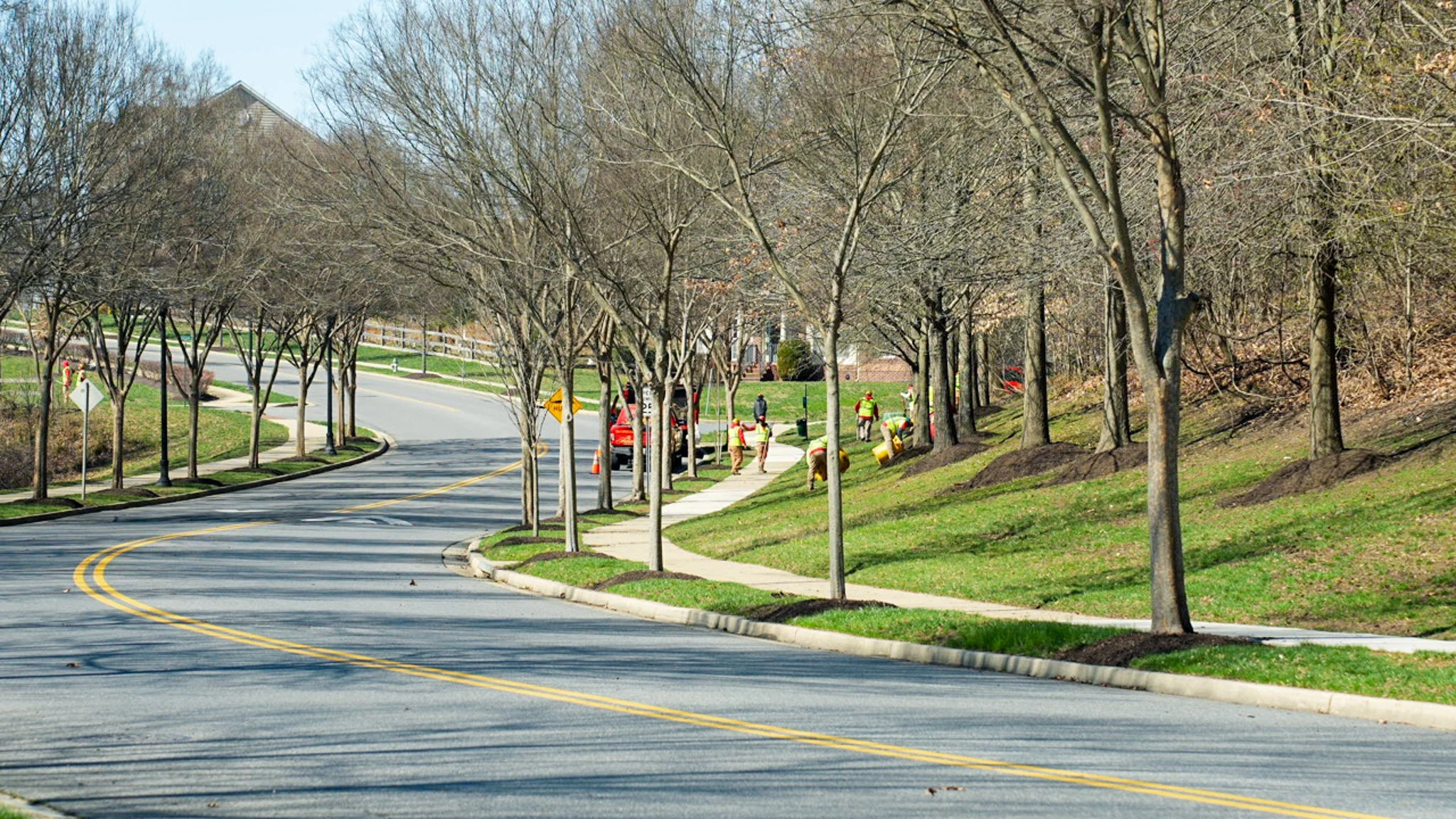
Property managers running more than one property rarely have a commercial turf care problem in Lanham, MD. They have a comparison problem.
Three proposals arrive, each describing applications and visits, and none of them makes clear how the program adapts to a shaded courtyard, a compacted parking island and an open boulevard on the same contract.
Artistic Landscaping delivers its Advanced Turf Program through licensed professionals holding MHIC, Chemical Applicator and CPR/First Aid certification, sequenced as seven steps across the year.
Working across HOA communities, office parks, industrial sites and institutional campuses has shown us where portfolio comparisons go wrong. Here is how to read them.
Related:Commercial Lawn Care Services in Lanham, MD: What a Turf Program Should Cover Season by Season
Are the Proposals Pricing the Same Turf?
Start by confirming the mapped area. Two contractors measuring the same portfolio frequently arrive at different acreage because one included the retention basin slope and the rights of way and the other did not.
Attach a marked site plan to each request so the numbers describe identical ground. Without it, the lowest total is often the smallest scope.
Confirm the standard as well as the ground. A portfolio bid written against an unstated expectation lets each contractor decide privately how good the turf has to look, and that assumption is what produces the gap between the proposal and the first walk-through in July.
How Many Applications Does Each Program Include?
Count them and lay them side by side. A four-application program and a seven-application program are different products, not different prices for the same thing.
What matters is which treatments fall where. Pre-emergent timing, targeted broadleaf control, balanced fertility through the season, late fall fertilization, preventive grub control and lime amendments each do a specific job at a specific point in the year.
Sequence matters as much as count. A pre-emergent applied late has missed its purpose entirely, and a fertility application landing during a heat stretch pushes growth the turf cannot support. Ask each contractor for the target window on every treatment rather than the annual total.
Does the Program Account for Site Variation?
A single specification applied uniformly across a portfolio treats a shaded north-facing lawn the same as a full-sun boulevard, and they do not behave the same way.
Ask how the contractor handles compaction along parking edges, thin turf under mature canopy, and the high-traffic zones near entrances. A program that identifies zones by condition will outperform one that prices by total acreage.
Soil testing is the cheapest way to settle these arguments. A test on two or three representative areas tells you what the sites actually need, and it converts a debate about which program tier to buy into a decision based on the ground itself.
Related: Why the Commercial Lawn Fertilization Company You Choose Affects More Than Just Turf Color
What Reporting Comes With the Program?
Ask what arrives after each visit. A dated record naming the site, the treatment applied, the conditions and any observations gives you something to put in front of a board. It also builds a history for each property, which is what turns a recurring complaint about one lawn panel into a diagnosis rather than another application.
Photographs strengthen the record considerably. A dated image of the same turf panel in May and again in September settles questions about whether the program is working, and it gives a board something concrete rather than a description.
Who Is Applying the Material?
On occupied commercial property this is a compliance question as much as a horticultural one. Ask what certification the applicators hold, how re-entry intervals are communicated to tenants and residents, and how applications are timed around occupancy and building schedules.
A contractor who answers immediately has thought about it. One who checks and calls back has not.
Get a Turf Program Scoped to Your Sites
A portfolio running on a proposal written for average conditions is paying for a program that was never scoped to what each property actually presents. Ours sequences seven treatments across the year and is priced site by site.
Contact Artistic Landscaping to have your commercial turf care reviewed across every property you manage.
In Summary
Should each property in a portfolio be on the same turf program tier?
The tier should follow the standard each site is held to. A high-visibility entrance community and a back-of-house industrial site have different expectations and different traffic, and matching the tier to each one keeps spending where visitors and residents actually notice it.
How quickly should a turf program show results on a struggling site?
Color and density respond within a season, while compaction, shade damage and soil condition take longer because the underlying cause has to be corrected first. Expect the first year to stabilize a poor site rather than transform it.
Who is responsible for irrigation if turf declines during a dry stretch?
That belongs in the contract before the dry stretch arrives. Artistic Landscaping establishes up front which party holds irrigation checks, since turf performance depends on them either way.
Related: Why Commercial Turf Care Programs Outperform One-Off Lawn Services in Lanham, MD